
Ford Tudor buyer's guide
Ford Tudor -- the model's own buyer's guide: variants, values and what to check.
Years listed: 1937-1941 · Series: Full Size
# Ford Tudor — Buyer's Guide
Overview and history
You do not buy a Tudor the way you buy a Mustang or a Corvette, because Tudor is not a model in the modern sense at all. Tudor — pronounced exactly as it is spelled, "two-door" — is Ford's period name for its two-door sedan, and Ford applies the name across two decades, three distinct generations of car, and two completely different engines. A 1930 Tudor is a Model A: upright, four-cylinder, mechanical brakes, a body framed partly in wood. A 1941 Tudor is a streamlined flathead V8 car with hydraulic brakes, a sealed-beam headlamp in each front fender, and a ride and cruising speed that belong to a different world. Both badges say the same word. Almost nothing else about them is interchangeable, and your first job as a buyer is to decide which Tudor you actually mean.
That confusion is also the opportunity. Because the name covers so much ground, the market treats Tudors loosely: stock cars, older restorations, mild customs and full street rods all appear under the same search term, often at overlapping asking prices, and sellers describe them with the same vocabulary whether the car under the paint is a preserved 1947 family sedan or a 1936 shell on a modern chassis with a fuel-injected small-block. You sort the field not by the badge but by generation, by drivetrain, and above all by how much of the original car survives. Start with the generations. The Model A Tudor, built from late 1927 through 1931, is the entry point to pre-war motoring: a 200.5-cubic-inch four making about 40 horsepower, a three-speed sliding-gear manual, transverse leaf springs front and rear, and a separate steel body on a ladder frame, with timber framing inside the body structure. The V8 Tudors of 1932 to 1948 replace nearly every part of that formula except the transverse springs and the torque-tube driveline: the famous flathead V8, in 221- and later 239-cubic-inch forms, a floor- or column-shifted three-speed manual, and — from 1939 — hydraulic brakes that transform how the car stops.post-war 1946–48 cars, which are essentially the 1942 design restarted, with the uprated 239 flathead as standard V8 power.
Why a two-door sedan at all? In period, the Tudor is the cheapest closed car in the range that still seats a family — cheaper than the four-door Fordor, lighter, and with a stiffer, simpler body shell. You therefore shop in two markets at once. The stock market values originality, matching numbers where the term applies, correct trim and honest mechanical condition. The rod market values the quality of the build — chassis work, wiring, cooling, panel fit — and cares little for matching anything. Neither market is wrong, but a car priced in one and built in the other is where buyers lose money, and this guide keeps returning to that distinction: identify which car you are looking at before you judge whether it is a good one.
One myth to clear away at the start: there is no such thing as a rare Tudor in the sense that scarcity protects your money. Ford builds these cars in enormous numbers across twenty years, and survival rates are high because the cars are simple, garaged as classics for decades, and supported by a vast reproduction industry. You pay for condition, originality or build quality, in that order of verifiability, and you walk away from any premium justified only by the word Tudor itself.
The models
Read the table below as a map of generations, not a menu of trim levels. Within each generation Ford offers the Tudor in Standard and Deluxe trim (the spelling varies — De Luxe, Deluxe, Super Deluxe — across the years), and the trim changes brightwork, upholstery, standard equipment and sometimes the availability of the smaller engine, but it does not change the structure, the suspension or the fundamental character of the car. A sound Standard is a better buy than a tired Deluxe every time.
| Model | Years | Engine | Output | Built | Character |
|---|---|---|---|---|---|
| Model A Tudor Sedan | 1928–1931 | 200.5 cu in L-head four | 40 hp | Very large numbers across the Model A range | Upright, charming, slow; the pre-war starter classic |
| Tudor (early V8) | 1932–1936 | 221 cu in flathead V8 | 65–85 hp | Large numbers; 1932 bodies the scarcest | Mechanical brakes, vintage feel, the classic early-Ford shape |
| Tudor (V8-60 option) | 1937–1940 | 136 cu in flathead V8 | 60 hp | A minority of production | The economy V8; smoother than a four, slower than an 85 |
| Tudor Sedan (streamlined) | 1937–1940 | 221 cu in flathead V8 | 85 hp | Large numbers | All-steel roof, hydraulics from 1939, the sweet spot for many buyers |
| Tudor Sedan (1941–42) | 1941–1942 | 221 V8 / 226 six | 90 hp / 90 hp | Moderate; production cut by the war | Bigger, softer, more modern; Super Deluxe trim at the top |
| Tudor Sedan (post-war) | 1946–1948 | 239 cu in flathead V8 / 226 six | 100 hp / 90 hp | Large post-war numbers | The developed final form of the pre-1949 Ford |
The Model A Tudor is the car that teaches you pre-war driving. You sit upright, you work a non-synchromesh gearbox with deliberate double-declutched downchanges, you plan your braking because four mechanically operated drums need a firm, early pedal, and you cruise at 40–45 mph in real comfort because the four pulls from low revs and the car is geared for the roads it was built for. What you check is not equipment but structure — the wood inside the body — and the state of a driveline that is now more than ninety years old. It is the easiest Tudor to own and the hardest to use as daily transport, and both halves of that sentence are equally true.
The early V8 cars, 1932–36, are where the flathead legend starts. The 221 V8 gives you genuine 60–65 mph cruising, a soundtrack no four matches, and — in the 1932–34 cars especially — the styling that defines the early-Ford look. You still have mechanical brakes (Ford holds out against hydraulics longer than its rivals), a floor-mounted gear lever, and on many bodies a fabric centre section in the roof that perishes, leaks and costs money to renew properly. The 1937 brings the all-steel roof, headlamps faired into the front wings on the way to full integration, and styling that still looks modern beside a 1934 car. The V8-60 is offered as the economy choice in these years: it is sweet and smooth but genuinely slow in a full-size sedan body, and period buyers mostly choose the 85. Hydraulic brakes arrive for 1939, and the 1940 adds the column gear change, sealed-beam lamps and the cleanest styling of the pre-war run. A 1939–40 Tudor Deluxe with the 85-horsepower 221 is the pre-war Ford in its most usable form: it stops, it cruises, and it still looks and feels like a 1930s car.
The 1941 car is bigger in every dimension — wider body, longer wheelbase feel, a much more substantial interior — and introduces the 226-cubic-inch six as the base engine alongside the 221 V8, both rated around 90 horsepower. Trim runs Special, Deluxe and Super Deluxe. Production runs into the war-shortened 1942 model year and stops in February 1942. The post-war cars of 1946–48 restart the same basic design with detail changes, the 239-cubic-inch V8 (the engine developed for Mercury, standardised across the line after the war) rated at 100 horsepower. These are the most developed and generally the most affordable V8 Tudors to buy and run.
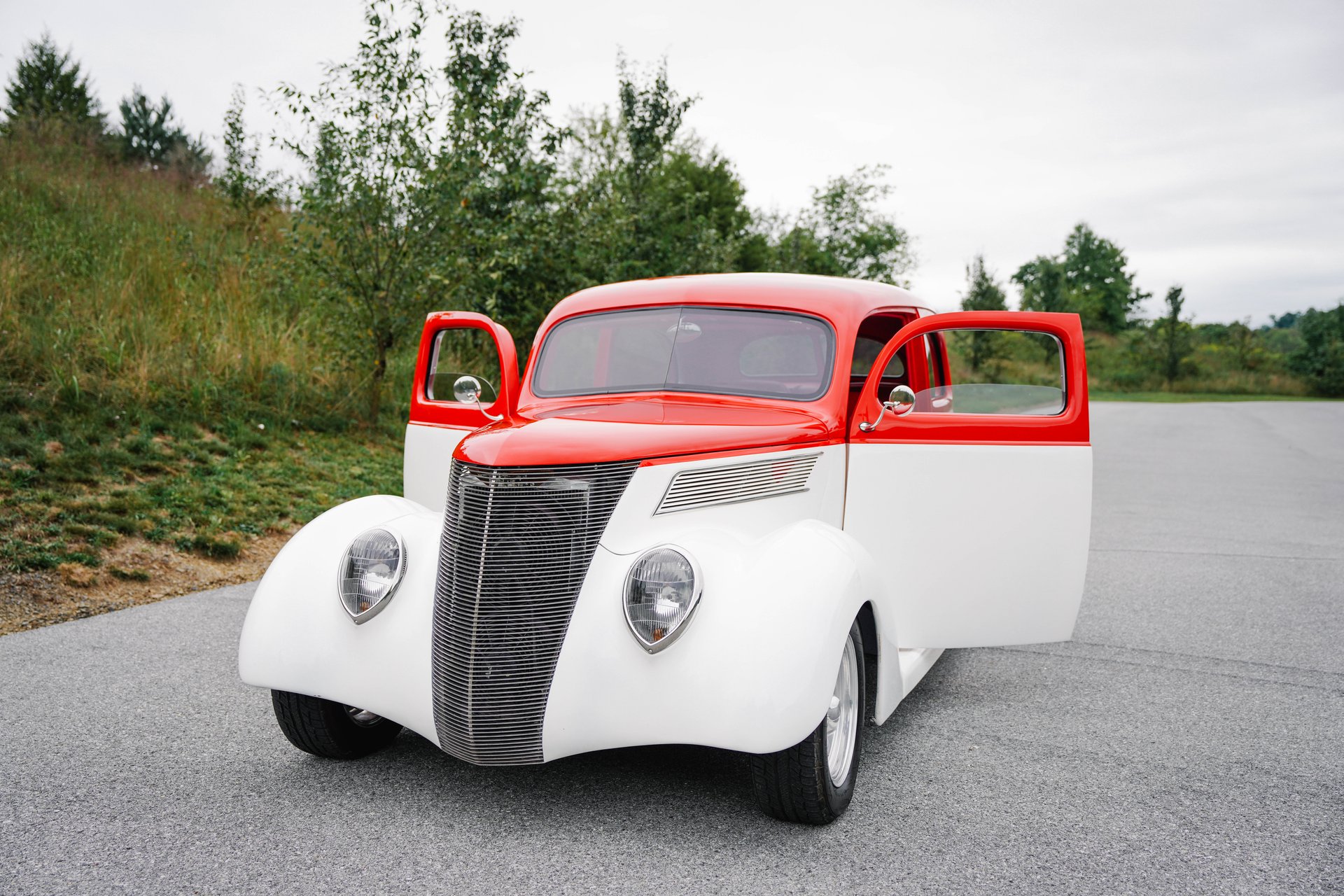

Across all generations, note what Tudor does not tell you. It does not tell you the engine — six, small V8 and big V8 all wear the same badge. It does not tell you the trim with certainty, because badges and brightwork swap easily over eighty years. And it does not tell you whether the car is stock at all. The sections that follow give you the checks that settle each of those questions in turn.
Engines and gearboxes
You identify what is actually in the car — not what the badge or the seller says — before anything else, because the engine determines the car's performance, its correct running gear, its value band and half the inspection that follows.
The Model A four: 200.5 cubic inches, 40 horsepower
The Model A engine is a side-valve (L-head) four of 200.5 cubic inches (about 3.3 litres), with a three-bearing crankshaft, splash-and-pressure lubrication that relies on dippers on the connecting rods and a trough system rather than a fully pressurised gallery, and a rated output of 40 horsepower at low revs. Ignition timing is manual, set by a lever on the steering column, and a car that feels gutless is usually a car whose timing, tappets or carburation are simply off. The updraft Zenith carburettor meters fuel from a cowl-mounted tank by gravity — there is no fuel pump — so starvation on hills is a head-of-fuel or blocked-filter problem, not a dying engine.
Identity is straightforward: the engine number is stamped on a pad on the left side of the block, and on an original car it matches the frame number stamped on the top of the left frame rail near the front crossmember area (revealed, awkwardly, only with the body lifted on many cars — which is why engine numbers are what most titles follow). What you are listening for on inspection is covered in the problem-areas section: bearing knock under load points to the poured Babbitt main and rod bearings that are this engine's defining service item.
The flathead V8: 221 and 239 cubic inches
The engine that defines the V8 Tudor is Ford's flathead V8, introduced in 1932 at 221 cubic inches and rated at 65 horsepower in its first form, rising through the 1930s to 85 horsepower in the form most pre-war buyers meet — the so-called "85" that powers the 1937–48 standard V8 cars (with the 1941 rating quoted at 90). After the war the 239-cubic-inch version, developed from the Mercury engine with a larger bore, becomes the standard Ford V8 at 100 horsepower in the 1946–48 cars. All of them share the architecture you need to understand as a buyer: a side-valve V8 with the exhaust passages routed through the water jacket of the block — the root cause of the flathead's lifelong sensitivity to cooling — two water pumps, one per bank, mounted at the front of the block and driven from the crank, a single downdraft carburettor (Stromberg and Ford/Holley units in period, varying by year), and a distributor driven from the front of the camshaft, mounted low at the front of the engine where it is awkward to reach and exposed to road water on early cars.
That front-mounted distributor is the single most useful diagnostic fact about a flathead Tudor. On the 1932–41 engines the distributor sits at the front, driven off the cam, with the coil mounted on top of it; points adjustment is done on the bench with the unit removed, and a car that runs poorly after rain, or that has a flat, spitting misfire under load, is very often suffering from moisture, worn points or a failing coil in that unit rather than from anything deeper. The 1942 and post-war engines move to a revised front distributor arrangement (the so-called "crab" and later "pancake" styles by enthusiast shorthand) that is easier to service. The 85-horsepower cars use a two-barrel downdraft carburettor — Stromberg 97, Ford/Holley 94 and their variants are the names you will meet — and these units are simple, rebuildable and well supported. Fuel delivery on the V8 cars is by a mechanical pump on the engine, and the glass sediment bowl on many years is your friend on inspection: rust flakes or water in the bowl tell you the tank's story before you drive a mile.
The flathead's cooling system deserves its reputation only when it is neglected. Two pumps, a large radiator and generous water passages cope perfectly well in period use; the failures come from silted blocks (the exhaust-heated water jackets deposit scale exactly where you least want it), collapsed hoses, slipping fan belts, thermostats removed by a previous owner in the mistaken belief that the engine "runs cooler without them" — it does not; coolant rushes through the radiator too fast to shed heat and the rear of the block runs hot —A flathead that overheats at speed but not at idle, or idles cool and climbs on a hill, is telling you which part of the system to test, and the inspection section walks you through that sequence.
The small V8 and the six: V8-60 and the 226
Two minority engines appear in Tudor engine bays and both are routinely misdescribed. The V8-60 (1937–40) is a 136-cubic-inch scaled-down flathead V8 rated at 60 horsepower. It is a real V8, smooth and quiet, and in a Tudor sedan it is simply underpowered by modern expectations: cruising is a 45–50 mph affair and hills need planning. Look at the engine: the 60 is visibly smaller, with its own distinctive heads and a compact block, and the car's original specification is the arbiter.
The 226-cubic-inch six (the G-series, from 1941; the post-war H-series development follows) is the base engine in 1941–48 Tudors, rated at about 90 horsepower. It is a conventional side-valve six, smooth, economical by the standards of the day and overshadowed entirely by the V8's reputation. If you want a post-war Tudor to drive rather than to display, a sound six-cylinder car at six-cylinder money is one of the rational buys in this guide. Check which engine a 1941–48 car actually has before you price it — the badge will not tell you, the seller's description may not either, and the difference shows up in the value band.
The engines you will actually find: swaps and street rods
A substantial share of the Tudors advertised today — including cars in the current listings pool for this model — are street rods or resto-mods: a period body (sometimes steel, sometimes fibreglass) over a modernised chassis with a small-block Chevrolet or modern Ford V8, an automatic gearbox, independent front suspension of Mustang II pattern, power steering, disc brakes and air conditioning. There is nothing wrong with any of this — a well-built rod is a better road car than any stock Tudor — but it is a different purchase. You are buying the quality of a one-off build: the welding on the chassis clips, the routing of the wiring, the adequacy of the cooling for the engine actually fitted, the geometry of the steering. Price a rod against other rods, never against stock cars, and never pay a stock car's originality premium for a car whose originality was removed on purpose.

Gearboxes: three speeds, two philosophies, and the automatics that were never factory
Every stock Tudor, from the first Model A to the last 1948 car, leaves the factory with a three-speed manual gearbox. There is no factory automatic in any pre-1949 Tudor, and no factory four-speed. Any Tudor advertised with an automatic — three-speed automatic, four-speed automatic or simply "automatic" — is a modified car, full stop, and you should reclassify it as a rod or resto-mod in your mind and in your pricing the moment you read it. This single check cuts through more misleading listings than any other in this guide.
The Model A gearbox is a three-speed sliding-mesh unit with no synchromesh: you double-declutch downchanges or you crunch, and the car rewards the learned technique with clean, quiet shifts. Wear shows as jumping out of second gear on the overrun — second is the gear that does the work in traffic — and as a whine that follows road speed. Parts and rebuild knowledge are universally available.
The V8 gearboxes are also three-speed manuals, floor-shifted through 1939 and column-shifted from 1940, with synchromesh on second and third (Ford adopts synchromesh for the V8 line in the early 1930s and refines it thereafter). The column shift on the 1940–48 cars is the wear point you will meet most often: the linkage runs down the steering column through a series of bushings and levers, and worn bushings give you a vague gate, missed shifts and a lever that feels like it is stirring soup. The gearbox itself is usually innocent; the linkage is the repair, and it is cheap in parts and fiddly in labour. Overdrive is not a factory Tudor fitment in these years; the Columbia two-speed rear axle is the period accessory that gives an early V8 car a cruising gear, and a genuine Columbia installation, with its controls intact, is a desirable and verifiable extra — ask to see it work, because the vacuum/electric control hardware is where they fail.
Drive layout is common to all of them: an enclosed torque tube carries the drive from the gearbox to the rear axle and locates the axle, with transverse leaf springs front and rear and lever-action or (on later cars) tubular shock absorbers depending on year and fitment. A worn universal joint at the front of the tube announces itself as a vibration and clunk that seems to come from everywhere. None of it is difficult; all of it is labour.
Problem areas
Start with the frame, because a Tudor body sits on a separate ladder frame and both halves have to be sound. On the Model A and the early V8 cars the frame is a straightforward channel-section ladder; rust attacks the rear crossmember area, the running-board brackets, the spring hangers and any point where mud traps against the rails, and accident damage shows as rippled rails or a car that sits visibly crooked. The 1941–48 frames are more substantial X-member designs and rust in the same places for the same reasons, with the addition of the body-mount outriggers, which rot quietly and announce themselves as body shake and door misalignment.
Body rust follows a map you can learn once and use on every Tudor. Floors go first — front footwells where wet shoes and leaking windscreens soak the boards and pans, and around the seat risers and body mounts. The bottoms of the doors and the lower cowl sides (the "dog leg" area ahead of the rear wheels on the later cars) trap water behind trim and underseal. The rear panel below the trunk opening, the trunk floor itself, the lower edges of the rear fenders where they meet the running boards, and the rain gutters and roof edges on the all-steel-roof cars complete the circuit. On the 1932–36 bodies with a fabric roof insert, add the roof aperture itself: the insert perishes, water enters, and the timber and steel around the opening rot together under a headlining that looks fine.
The wood inside these bodies is the speciality that catches buyers out. They are composite construction: steel panels over a hardwood frame that gives the body its shape and much of its stiffness, with wood in the doors, the body sills, the roof structure and around the windows. Sound wood is invisible and irrelevant; rotten wood shows as doors that drop and will not stay adjusted, a body that creaks and flexes over bumps, window frames out of square and screws that no longer hold in soft timber. Prod suspect areas with an awl where the owner permits — sill wood at the base of the doors and the wood around the roof opening are the critical pieces. Replacing body wood is skilled, slow work: a wood kit itself is a few hundred dollars in timber, but fitting and re-skinning runs to $2,000–5,000 a side in professional labour on a badly affected car, and it is the single job most likely to turn a cheap Model A Tudor into an expensive one. The all-steel bodies from 1937 onward reduce the wood content drastically, which is one practical reason the later cars are easier to own.
Repairs hide under fresh underseal, fresh paint and new carpets — the holy trinity of the quick cosmetic job. A magnet wrapped in cloth tells you where filler lives on steel panels (it tells you nothing on a fibreglass replica body, which is itself a finding: rap the panels, listen for the dull thud of glassfibre, and reclassify the car). Bubbling along the bottom of a door or the edge of a fender on a recently painted car means rust is already coming back through from behind, and the honest price of fixing it is a cut-out-and-weld repair at $800–2,500 per panel area depending on size and paint blending, not a sand-and-fill at a quarter of that. Judge paint by its edges: overspray on rubbers, paint on window seals and a colour change inside the door shuts tell you how the last respray was done and how much preparation is underneath it.

Flathead V8 health: bearings, bores and the cooling system that decides everything
A flathead that starts easily, idles evenly, pulls cleanly and holds its temperature is a healthy engine, because the design has no hidden vices — its failures are progressive and audible. Oil pressure on a warm engine is your first gauge: these are low-pressure systems by modern standards, but a needle that falls away to nothing at a hot idle, with a deep knock that comes in under load, is main and rod bearing wear, and a full flathead rebuild — bearings, pistons, bores, valve work, the whole machine-shop programme — runs $5,000–9,000 professionally, which is why the engine's condition dominates the value of any stock V8 Tudor. Blue smoke on the overrun after a downhill run points to valve guides and seals; continuous blue smoke under load is rings and bores. The flathead's valves are in the block, and a chattering valve that will not quiet is a wear item, not a catastrophe.
Cracks are the flathead fear, and they need a level head. The blocks are old castings that have lived through decades of overheats and freezes, and cracking between the valve seats and the bores, and around the centre exhaust ports, is documented and common on engines that have been abused. A car that blows its cap, bubbles continuously or emulsifies its oil has failed the test in front of you and you price a replacement block or a rebuild into it. Freeze cracks on the outside of the block, along the pan rail, are visible with a torch and are walk-away-or-renegotiate evidence depending on severity.
Cooling, covered mechanically in the engines section, is where you spend your test-drive attention. Watch the temperature gauge (or the MotoMeter on earlier cars) through the whole drive: a healthy system climbs to its thermostat plateau and stays there. Climbing steadily in traffic points to airflow and radiator capacity — fan, shroud where fitted, core condition. Climbing under sustained load points to circulation and block silt. A system full of rusty water is a system that has not been maintained, and a flush, a radiator recore ($600–1,200) and two rebuilt water pumps ($150–300 the pair in parts) are the standard recommissioning bill. Hoses, belts and the generator drive are consumables; budget them on any car that has sat.
The Model A four has its own version of the same story. Its poured Babbitt bearings are the defining wear item: a dull, heavy knock under load that disappears on the overrun is rod bearings asking for attention, and re-Babbitting and line-boring is specialist work at $1,500–3,000 for the bottom end as part of a larger rebuild. Fuel systems age identically across all generations. Tanks rust from the inside, especially on cars stored with part-empty tanks, and the rust travels: it blocks the Model A's gravity filter, fills the V8's sediment bowl, and eats carburettor needle valves. Tank removal, cleaning and sealing is a $300–800 job depending on who does it; a reproduction tank, where available, is often the cleaner answer.
Gearbox, clutch, torque tube and rear axle
The manual gearboxes themselves are durable; their linkages, clutches and mountings are where the trouble lives. Column-shift cars (1940–48) with worn linkage bushings give the vague gate described earlier — renew the bushings and the shift becomes precise again, a $50–150 parts job with several hours of fiddly labour. Floor-shift cars wear at the lever pivot and the selector forks; jumping out of gear on the overrun, second on the Model A and any gear on the V8, means internal wear — synchromesh cones, dog teeth, bearings — and a gearbox rebuild at $800–1,800 in parts and machine work if you cannot do it yourself. Clutch judder, slip on hills in top gear, and a release bearing that growls with the pedal down are the standard trio; a clutch job on a torque-tube Ford is a full day's labour because the tube and axle come back to reach it, so a $250 clutch kit becomes a $900–1,400 fitted bill. Price accordingly when a seller mentions a "slight judder".
The enclosed driveline hides its wear. The single universal joint at the front of the torque tube, the speedometer drive, the radius rods and their ball joint at the rear of the gearbox, and the rear axle bearings and seals all live out of sight, and their symptoms — a clunk on taking up drive, a vibration that peaks at a particular road speed, oil weeping from the rear hubs onto the brake backplates — are easy to miss on a short drive. On a rod, none of this applies: you are inspecting a modern open driveshaft, a Ford 8- or 9-inch or a GM axle, and the checks are the modern ones — U-joint play, pinion seal leaks, and whether the axle ratio suits the engine and gearbox combination at cruising speed.
Suspension, steering and brakes: transverse springs and two brake eras
Every stock Tudor rides on transverse leaf springs, a solid front axle and lever or tubular dampers by year, and the system is better than its reputation when it is maintained. The wear items are spring shackles and bushings (perished or seized, giving a harsh, crashy ride and wandering steering), kingpins and bushings in the front axle (play you feel by rocking the wheel top and bottom with the car jacked), and dampers that have leaked their oil and are doing nothing (the car pitches and floats after a bump instead of settling in one movement). Re-bushing and kingpin work is $400–1,000 in parts across the front end, plus alignment by a shop that understands beam axles — many modern shops do not, and a specialist is worth the trip.
Play at the wheel rim beyond a couple of inches means adjustment first (the boxes are adjustable, and adjustment is a service item, not a repair) and wear second: box internals, drag link ends, tie-rod ends. Budget it as such on any car that feels loose.
Brakes divide the Tudor world in two. Mechanical brakes — rod- and cable-operated drums on the Model A and all V8s through 1938 — work by even application of force through a linkage that must be adjusted as a system; a well-set-up mechanical system stops the car adequately for its performance, and a neglected one pulls, fades and frightens. Budget a full mechanical brake overhaul — shoes, drums skimmed or replaced, linkage rebuilt — at $1,000–2,000 on a car that has not had one, and treat "the brakes want adjusting" in a listing as "the brakes want rebuilding" until proven otherwise. Hydraulic brakes from 1939 are conventional single-circuit drums: the failure modes are fluid age, perished flex hoses, seized wheel cylinders and a master cylinder that bypasses internally (the pedal sinks slowly under sustained pressure — test it at a standstill with firm, steady pressure for thirty seconds). Single-circuit means one failure is total, so on any hydraulic Tudor the flex hoses, cylinders and fluid are recommissioning items regardless of how the pedal feels, at $500–1,000 for a full hydraulic refresh with parts and labour. Drums that are scored or beyond skim limits, and asbestos-era shoes, are handled by specialists without drama.

Electrics, instruments and interior
Six volts, positive earth, is the stock electrical architecture for every Tudor, and it works perfectly well with clean connections and correct cable sizes. The classic six-volt complaint — a starter that cranks slowly and a seller who tells you "they all do that" — is almost always resistance: thin modern replacement cables, corroded earth straps between engine, frame and body, or a tired starter. The test is cranking speed on a cold morning with a charged battery; a healthy six-volt system spins the engine briskly. Do not let anyone sell you a twelve-volt conversion as the cure for bad earths, and do treat a conversion already fitted as a quality question: done with an alternator, correct bulbs and gauges and tidy wiring it is a practical upgrade; done with a battery and hope it is a fault-finding nightmare in waiting.
Wiring itself is the other age item. Original cloth-braided looms chafe, crack and shed insulation, particularly where they pass through the frame and around the steering column, and a Tudor that blows fuses, flickers its lights over bumps or has a nest of modern crimp connectors under the dash is a car whose loom wants replacing — reproduction looms are available for most years at $300–800 in parts, and fitting one is the definitive cure for a dozen electrical mysteries at once. On rods, wiring is the build quality question in its purest form: a labelled, fused, properly routed modern loom is the sign of a careful builder, and household connectors, unfused feeds and wires through un-grommeted holes are the sign of the opposite.
Instruments are simple and mostly durable. Speedometers fail at the cable (a needle that waves or sticks) or at the drive gear in the gearbox; fuel gauges fail at the tank sender — hydrostatic on some early cars, electric later — and a gauge that reads full forever or empty forever is a sender or its earth, tested by grounding the sender wire. Ammeters and temperature gauges rarely lie when they move smoothly. On the Model A the instrument panel is minimal by design and everything on it is reproduced.
Interiors divide by trim level and by what the last restoration spent. Mohair and broadcloth perish, moth and split along the seat crowns; leather appears on some open cars rather than Tudors; the post-war cars use vinyl and cloth combinations that survive better. Headlinings sag and stain from roof leaks — a stained headlining is a leak report, so find the leak (roof insert, rain gutters, windscreen seal) before you price the trim. A full retrim in correct materials is $3,000–6,000 professionally for a Tudor; a serviceable older retrim in slightly wrong materials is worth more to a driver-buyer than a perished original, and less to a show buyer, which is why the same interior can be a plus or a minus depending on which market the car is in. None of it is fatal, all of it is money, and the total for "just the soft stuff" surprises every first-time buyer of a pre-war car.
How to inspect one
Work in this order: the checks that can end the inspection come before the ones that merely set the price, and every step cross-references the problem area it tests.
- Settle the identity first. Read the title and the car's numbers before you look at the paint. On a Model A, the engine number on the left of the block is the number most titles follow; on the V8 cars the serial is stamped on the frame (left rail, visible near the front crossmember and repeated along the rail) and on the transmission case, and the prefix encodes the engine type and year range. A number that does not match the paperwork, a restamped pad, or a title that describes a different year or engine is not a detail — stop and resolve it, because a Tudor you cannot title cleanly is a parts car at any price.
- Decide which market the car is in. Steel or fibreglass panels (knock test, magnet), stock engine or swap (count the plug leads, look for the flathead's front distributor and twin water pumps), manual or automatic (any automatic settles it: modified). Write down, literally, "stock", "older restoration", or "rod" — every later judgement prices against that label, and the engines section gives you the identification points.
- Walk the rust map with a torch and a cloth-wrapped magnet. Floors, door bottoms, cowl sides, trunk floor, rear panel, fender-to-running-board joints, gutters and roof edges, in that order, per the rust section. On a Model A or early V8, add the wood test: push an awl into the sill wood at the door bases and around the roof opening where the owner permits, and slam each door — a door that needs lifting to latch is telling you about hinges, wood or both.
- Get underneath, or do not buy the car. Frame rails, rear crossmember, spring hangers, body mounts, the torque tube and the backplates (oil on a backplate means an axle seal and contaminated brakes). A seller who will not let you put a Tudor on a lift or at least crawl it with a torch is selling you the underside unseen, and you price that risk as a project or you walk.
- Cold start, from stone cold, and insist on it. A flathead or Model A four that starts readily cold, with the correct choke and (on the A) spark lever procedure, has compression, fuel and ignition in basic order. Watch for the puff of blue that clears (guides) versus smoke that persists (bores), listen for the deep knock of Babbitt or flathead bearings under a blip of load, and watch the exhaust for coolant steam that does not clear as the engine warms.
- Run the cooling test on the drive, not in the yard. Twenty minutes minimum, including a sustained hill or a fast road and a period idling in traffic. The gauge should plateau and hold, per the cooling discussion in the problem areas. A car that "never overheats" but is offered with a short demonstration route is a car whose owner is managing the test — extend the route or discount for a radiator recore, pumps and a block flush.
- Test the brakes for the era the car belongs to. Mechanical brakes: three firm stops from 30 mph — the car should pull up straight with a hard pedal; pulling or a springy, uneven feel is the linkage overhaul the problem section prices. Hydraulic brakes: the same stops, plus the thirty-second sustained-pressure test at a standstill for a sinking pedal, plus a look at the flex hoses' date and condition. Any hydraulic car with unknown hoses and fluid gets a full refresh in your budget, not a note to self.
- Drive the gearbox through its actual life. Model A: double-declutch the downchanges and listen for second gear jumping out on the overrun. V8: use every gear, feel the column shift's gate on a 1940–48 car (vagueness is linkage bushings, priced in the gearbox section), and load the clutch on a hill in top to check for slip. A Columbia axle, if claimed, must demonstrate both ratios.
- Feel the front end at speed and at rest. Jacked, rock each front wheel top-and-bottom (kingpins) and side-to-side (tie rods and box play). Driving, a sorted Tudor tracks straight with one settling movement after a bump; floating, pitching or wandering is the shackle-bushing-damper sum the suspension section describes, and you budget the systematic refresh, not a single part.
- Work every electrical item, then look at the loom. Lights, horn, wipers, gauges, charging at cruising speed on the ammeter. Slow cranking on a six-volt car sends you to the earth straps and cable sizes before the starter, per the electrics section. Then look under the dash: original cloth loom in sound order, a tidy reproduction loom, or a bird's nest — the third is a rewire in the budget and, on a rod, a verdict on the whole build.
- Interrogate the interior for water, not for wear. Stained headlining, warped door cards, musty carpets and silt lines in the trunk are the leak trail from the interior section; wear alone is honest and priceable, water is a cause you must find. Operate every window and door mechanism, sit in the back (the Tudor's rear seat is reached past the folding front seats — check they fold and latch), and check the windscreen frame corners on early cars.
- Finish with the paperwork of the life, not the sale. Restoration invoices, club membership, dated photographs of body-off work, receipts for the jobs this guide prices — a rebuilt flathead, a brake overhaul, a rewire. On a stock car, documentation of those jobs is worth real money because it removes them from your budget. On a rod, the build file is the car's entire provenance, and a rod without one is priced as an unknown build however shiny it looks.

Values
The Tudor market is really three markets wearing one badge, and the first value skill is refusing to compare across them. A stock Model A Tudor, a restored flathead V8 car and a street rod built from a 1930s shell are different objects bought by different people for different reasons, and a price that is strong for one is meaningless for the other two. When you look at the recorded sales and current listings for this model — the figures the site computes and keeps current beneath this guide — filter your comparisons by generation and by market before you let any number influence you. An average across all Tudors averages away the only information that matters.
Within the stock market, the spread is driven by condition in a way that surprises buyers used to newer classics. These cars were built in huge numbers and survive in huge numbers, so there is no scarcity floor under a rough one: a project Tudor with rust in the floors and a tired engine competes with every other project in the country, and its value is essentially the value of its restorable core — body identity, frame, complete trim — less the cost of the work this guide has priced for you. The middle of the market — shiny paint over unknown mechanicals — is where the money is lost, because the paint is the cheapest part of a Tudor to make pretty and the easiest to mistake for condition.
Generation and specification move value in predictable directions. The 1932 cars carry a premium that is about that single model year and its place in hot-rod and collector history, and it applies to genuine steel cars with their identity intact — it does not transfer to a fibreglass replica or a car whose 1932-ness is a title and a grille shell. The streamlined 1937–40 cars, especially the 1939–40 with hydraulic brakes, are the pre-war sweet spot where demand from drivers and from rodders overlaps. Post-war 1946–48 cars are the value end of the V8 range: mechanically the most developed, visually the least romantic to the market, and priced accordingly — which is precisely why they reward a buyer who is purchasing transport rather than silhouette. Six-cylinder and V8-60 cars sit below their 85- and 100-horsepower equivalents in the same condition, by an amount that reflects fashion more than merit. Trim — Deluxe and Super Deluxe against Standard — adds a modest premium when the trim is complete and correct, and nothing when it is partial, because completing it is a parts hunt.
Modified cars invert the logic. A street rod's value is the quality and coherence of the build: a documented chassis, a well-cooled and well-wired drivetrain, panel fit and paint that survive close inspection, and a specification that suits how the car will actually be used. Originality adds nothing and its absence subtracts nothing; what subtracts is amateur work in the places this guide has taught you to look — wiring, cooling, steering geometry — because rectifying a stranger's build is open-ended labour.
Asking prices and achieved prices part company most widely on the over-described cars: the "frame-off restoration" with no invoices, the "matching numbers" claim on a car whose engine has been changed, the project described as "nearly finished" when the remaining work is the expensive half. Your defence is the arithmetic this guide gives you. Price the car in front of you, subtract the costed jobs it demonstrably needs — brakes, bearings, wood, wiring, cooling — and let the recorded sales for genuinely comparable cars (same generation, same market, same honest condition band) tell you whether the remainder is fair. Sellers of good Tudors price them against the same evidence and expect the conversation; sellers of bad ones rely on you not having it.
Parts and ownership
Ownership is where the Tudor's mass production pays you back. Ford built these cars by the million across the generations, the enthusiast world is enormous and organised — the Model A clubs and the Early Ford V8 Club ecosystem between them cover every year this guide discusses — and the reproduction industry supplies everything from Babbitt-era engine internals to complete body panels, wiring looms, rubber seals and trim. For the Model A, availability is effectively total: mechanical parts, body wood kits, panels and trim are all in current production from multiple suppliers, and a Model A Tudor is one of the very few ninety-year-old cars you can maintain entirely from catalogues. For the V8 cars the picture is nearly as good for mechanical and service parts — flathead engine internals, brake and suspension components, carburettor and distributor rebuild parts, cooling components — and thinner for year-specific trim, brightwork and Deluxe-only details, which is why trim completeness features so heavily in the inspection: the grille, badges and interior details that are missing on a 1941 Deluxe may be a two-year search rather than a two-day order.
Running costs follow the era. Fuel consumption is honest rather than good: a Model A returns economy in the high teens to low twenties of miles per gallon in gentle use, a flathead V8 in the mid-teens, and both are content on modern regular fuel with the caveats that ethanol attacks period fuel-system materials (fit ethanol-rated hoses and a modern needle valve and the problem is managed) and that flatheads in particular benefit from the cooling-system maintenance described earlier rather than from any fuel additive. Budget an annual service-and-consumables figure in the hundreds rather than the thousands for a car in regular use, plus the standing allowance for one age-related job a year — a water pump, a brake cylinder set, a set of shackle bushings — because that is the rhythm of pre-war ownership even for a good car.
Storage and use shape the car's future condition more than mileage does. A Tudor that is driven monthly, warmed through and kept in dry storage deteriorates slowly; the same car parked for five years with fuel in its tank and water in its block comes back needing the fuel system, the brakes and the cooling system recommissioned together, which is why "stored for years, ran when parked" is a costed condition in this guide and not a charming detail.
The ownership dividing line, as with buying, is the modified car. A street rod's parts support is the sum of its donor parts: the engine, gearbox, axle and front suspension each belong to some modern car's catalogue, which is excellent support if the build file tells you what they are and a detective story if it does not. Before you buy a rod, identify its major components as an ownership exercise, not just an inspection one — you will be ordering parts for a Chevrolet engine, a Mustang II front end and a Ford axle in a car the parts counter calls a 1937 Ford, and the owners who enjoy rods are the ones who keep that list.

Which one to buy
- The all-rounder: a 1939–1940 Tudor with the 85-horsepower 221 V8. Hydraulic brakes, all-steel body, pre-war looks and the deepest parts and knowledge support of any V8 generation. Buy the best-documented stock example you can find and you own the Tudor most people mean when they picture one.
- The value buy: a 1946–1948 Super Deluxe Tudor, V8 or six. The most developed chassis and engine in the guide at the softest prices in the V8 range. A sound six-cylinder car at six-cylinder money is the rational driver's pick of the entire Tudor field.
- The pre-war starter: a Model A Tudor, 1930–1931. The cheapest route into 1920s–30s motoring with total parts support and the friendliest club scene in the hobby — provided you buy the body wood and Babbitt bearings with your eyes open and your cruising ambitions set at 45 mph.
- The collector's pick: a genuine steel 1932 Tudor. The one Tudor where the year itself carries the value. Verify the body is steel, the frame number is right and the identity is continuous, and expect to pay for all three.
- The driver's rod: a well-documented steel-body street rod on a 1936–1940 shell. Buy the build file as much as the car — chassis, cooling, wiring and component identity all written down — and you get modern road manners in the best-looking sedan shape Ford made before the war.
- The one to walk past: any Tudor, of any year, whose price needs the word "rare". Tudor is a body style built in enormous numbers; rarity claims are how ordinary cars get extraordinary prices, and the next honest car is always a listing away.
The overriding rule: buy the Tudor whose identity, structure and market you have verified — stock, restored or rod — and pay for documented condition in that market, because on a car this common and this old, the badge is free and everything that matters is underneath it.
See the 2 Tudor cars currently listed.
For sale now
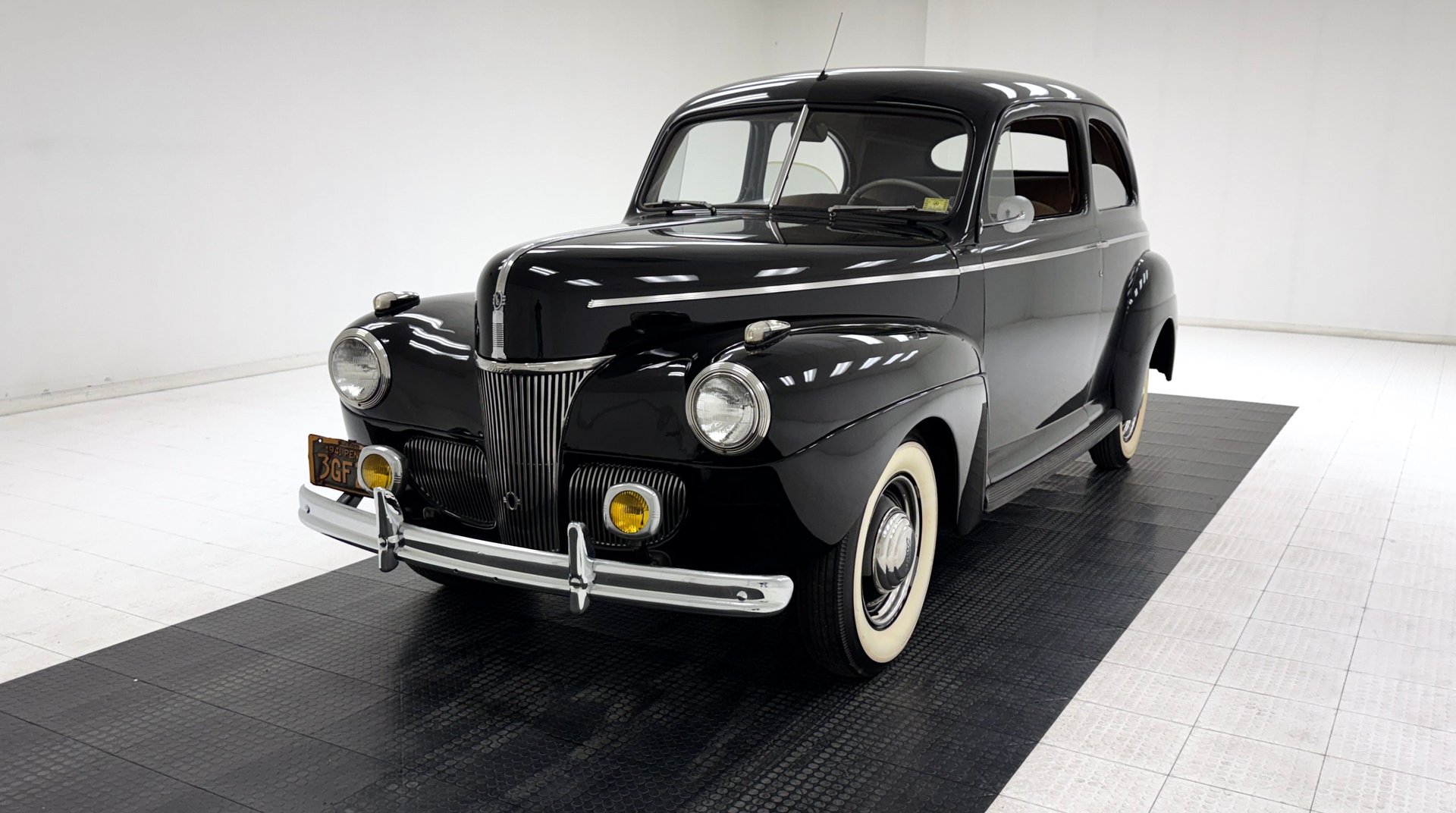 $10,900 · 53% below typical
Expand
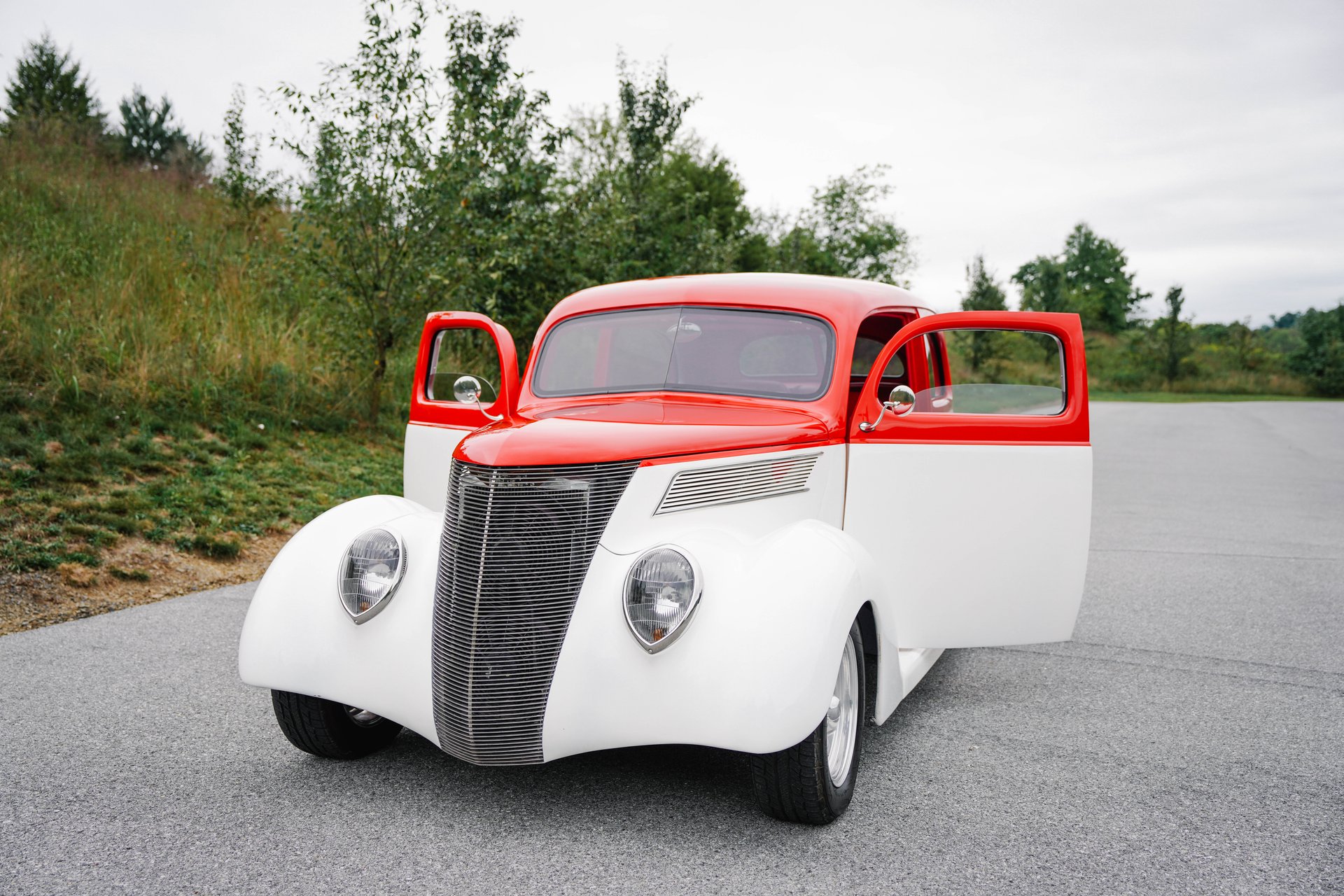 $38,990 · 68% above typical
Expand
What they sell for: Tudor sale prices.